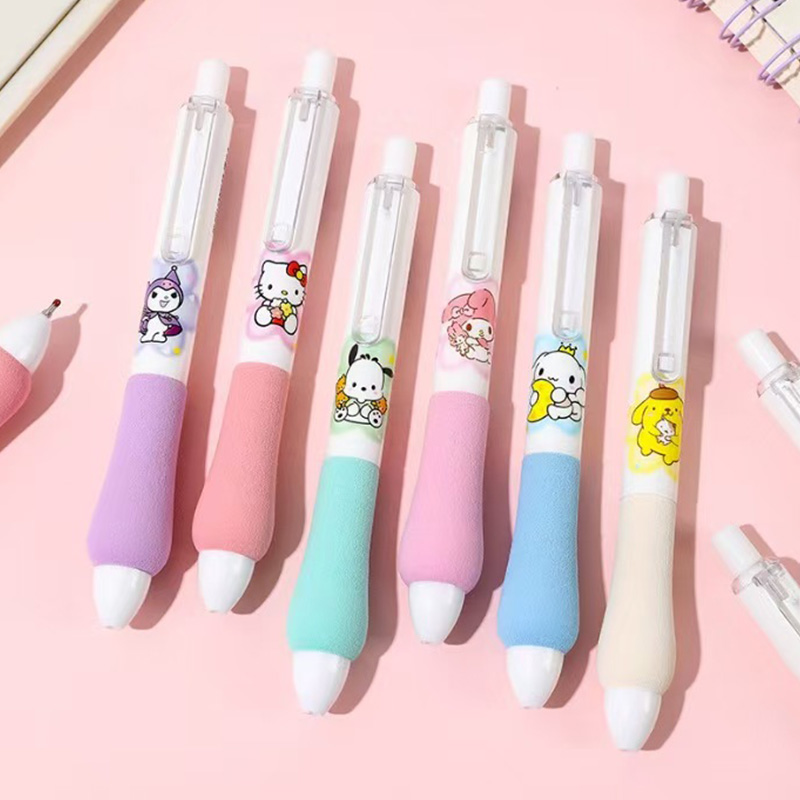
A pen may appear simple at first glance, yet much of its writing performance depends on one compact part—the Gel Pen Refill. Hidden inside the pen barrel, the refill stores the ink, guides it toward the writing tip, and delivers a continuous line onto paper. Whether someone is taking classroom notes, sketching ideas, signing documents, or writing in a journal, the refill plays a central role in the experience.
As demand grows for smooth handwriting and colorful stationery, manufacturers continue refining refill production with greater attention to ink consistency, dimensional accuracy, and assembly precision.
Producing a Gel Pen Refill begins long before ink is added. The plastic tube, writing tip, metal ball, sealing plug, and ink formulation are manufactured separately before coming together on automated production lines.
A typical manufacturing process includes:
Every step requires close coordination. Even a tiny variation in the internal diameter of the refill tube or the position of the writing ball can influence ink delivery during use.
The ink inside a Gel Pen Refill is carefully developed to balance color intensity, flow behavior, and writing comfort. Unlike traditional oil-based ink, gel ink contains pigments suspended in a water-based gel, creating clear, vibrant lines on many paper surfaces.
Manufacturers adjust ink characteristics according to different writing purposes. Some formulations produce bold, highly visible strokes, while others are designed for fine handwriting or detailed illustration.
Although the writing tip measures only a few millimeters, it is one of the defining features of a Gel Pen Refill. The tiny metal ball rotates freely as the pen moves across paper, transferring ink in a controlled manner.
Manufacturing this assembly demands high machining accuracy. The ball and tip housing must fit together with extremely small clearances. If the gap is too narrow, ink flow may become restricted. If it is too large, excess ink may appear during writing.
Automated inspection systems measure key dimensions throughout production, while specialized equipment checks ball rotation and tip alignment before the refill advances to the next stage.
These precision manufacturing methods help create writing performance that remains stable across large production batches.
Today's stationery market serves students, office workers, artists, designers, and hobbyists, each with different writing preferences. To meet these varying needs, Gel Pen Refill manufacturers produce multiple configurations.
Common variations include different point sizes, refill lengths, tube diameters, and ink capacities. Some refills are intended for compact retractable pens, while others fit larger premium pen bodies.
Many production lines can also switch efficiently between different specifications, allowing manufacturers to produce a wide selection of refill styles without lengthy production interruptions.
This flexibility supports brands developing diverse stationery collections while giving users more options for handwriting, note-taking, technical drawing, and creative expression.
Although small in size, the Gel Pen Refill represents the combined effort of material engineering, precision machining, automated assembly, and detailed quality control. Every refill is designed to deliver smooth ink movement from the reservoir to the paper with reliable consistency.
As writing instruments continue to serve schools, workplaces, creative studios, and homes, manufacturers are refining production techniques that improve dimensional accuracy, ink stability, and assembly efficiency. The result is a compact component that quietly supports millions of handwritten words every day.
 Lanxi Economic Development Zone, Jinhua, Zhejiang (No. 30, Qiuling Road, Lanjiang Street)
 +86-13806548080
 [email protected]
Copyright © Zhejiang Wenao Stationery Co., Ltd. All Rights Reserved.
Writing Pens and Refills Factory


 English
 中文简体
中文简体 русский
 Français